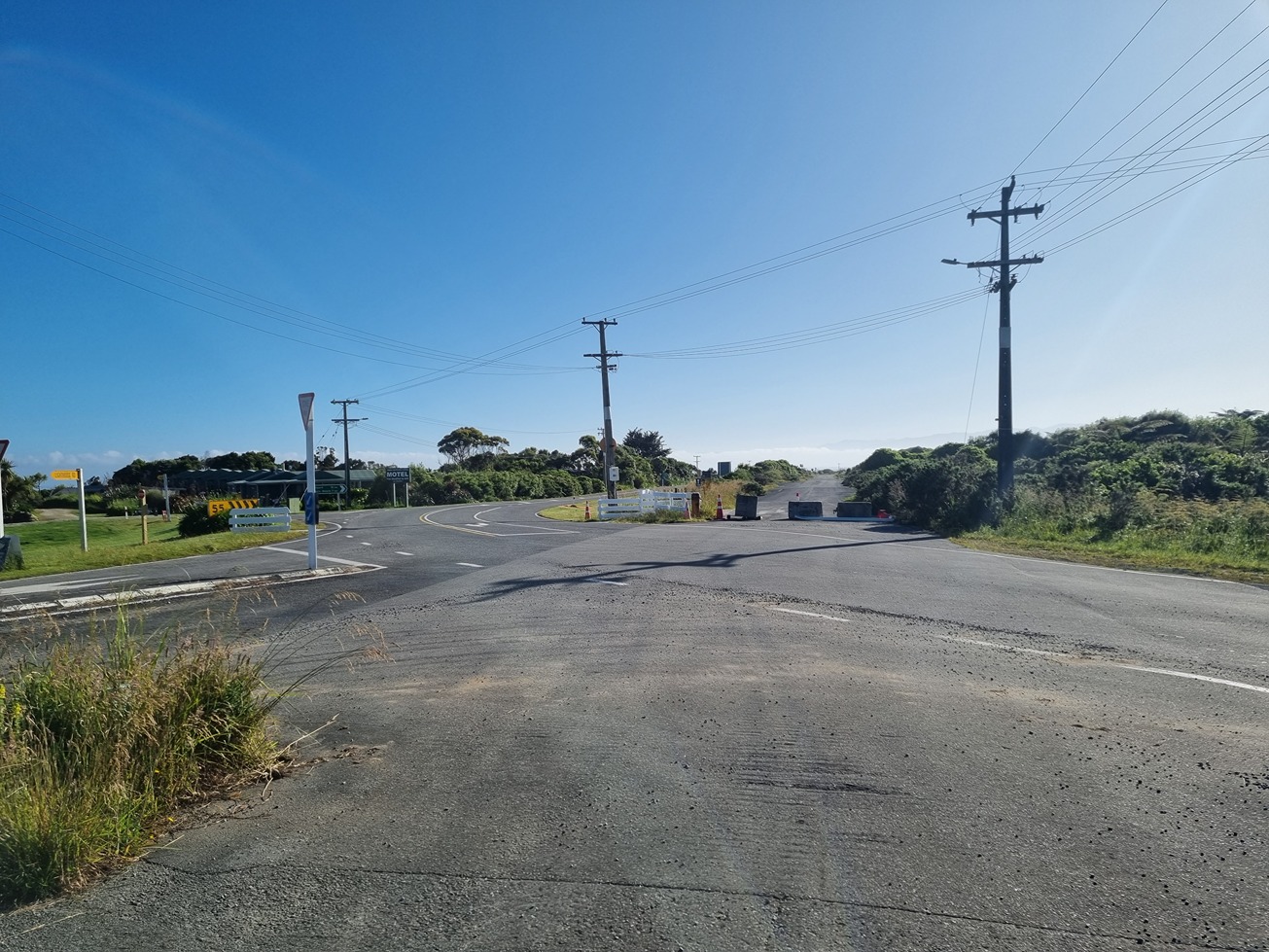
Omau intersection safety upgrades

Kia ora koutou - welcome to the project page for the safety improvements proposed for the intersection of Omau, Lighthouse, Cape Foulwind, Tauranga Bay and Limestone Roads. 


Project overview

Buller District Council is progressing the Omau Intersection Safety Improvement Project to increase safety at the intersection of Cape Foulwind Road, Tauranga Bay Road, Limestone Road and Lighthouse Road.

The project will improve safety and accessibility for residents, visitors, cyclists and users of the Kawatiri Coastal Trail.

The project is co-funded by NZ Transport Agency Waka Kotahi (NZTA) through the Low Cost, Low Risk (LCLR) programme

Why has the design changed?

The Omau Intersection Safety Improvement Project was originally developed as a road safety project focused on improving the existing intersection. As design work progressed, a more extensive concept was developed that included significant road realignment, substantial earthworks, drainage works and associated infrastructure changes.

Further technical investigations, environmental assessments and cost reviews identified that the larger concept would:

  • Exceed the available project budget.
  • Require significantly more earthworks and imported fill.
  • Increase impacts on nearby wetland areas.
  • Require additional drainage extension, foundation to the embankment toe and other landscaping works.
  • Increase consenting requirements and delivery risks.

Following this review, Council reassessed the project and developed a revised design that focuses on achieving the intended safety outcomes while reducing environmental impacts, construction complexity and overall project risk. The revised design also ensures the project can be delivered within the approved funding available for the project.

What will the revised design deliver?

The revised design maintains the project's primary purpose of improving safety for all road users while providing a more affordable and environmentally responsible solution.

Frequently asked questions

Read our frequently asked questions for further details about the project.

The intersection has a history of safety concerns and is used by local residents, visitors, commercial vehicles, cyclists and users of the Kawatiri Coastal Trail. The project aims to improve safety for everyone using the intersection.

As the design progressed, a more extensive concept was developed that included significant road realignment and additional infrastructure works. Further investigations identified higher costs, greater environmental impacts and increased construction complexity than originally anticipated. The revised design provides a safer, more affordable and environmentally responsible solution.

Despite a reduced project scope, safety remains the primary objective of the project. The revised design continues to deliver the project's key safety outcomes while reducing environmental impacts, construction risks and overall costs.

The Omau Intersection Safety Improvement Project is funded through NZ Transport Agency Waka Kotahi's (NZTA) Low Cost, Low Risk (LCLR) programme, which is intended for smaller-scale safety improvements. The project approved for funding focused on improving safety at the existing intersection, with only minor road realignment.

As design development progressed, the earlier concept evolved into a significantly larger and more complex proposal that included major road realignment works, substantial earthworks and associated infrastructure changes. Further review identified that this approach would exceed the available funding allocation and introduce additional environmental, consenting and delivery risks.

Council subsequently reviewed the project and developed a revised design that aligns with the approved funding scope, focuses on achieving the intended safety outcomes, and can be delivered within the available funding while reducing environmental impacts.

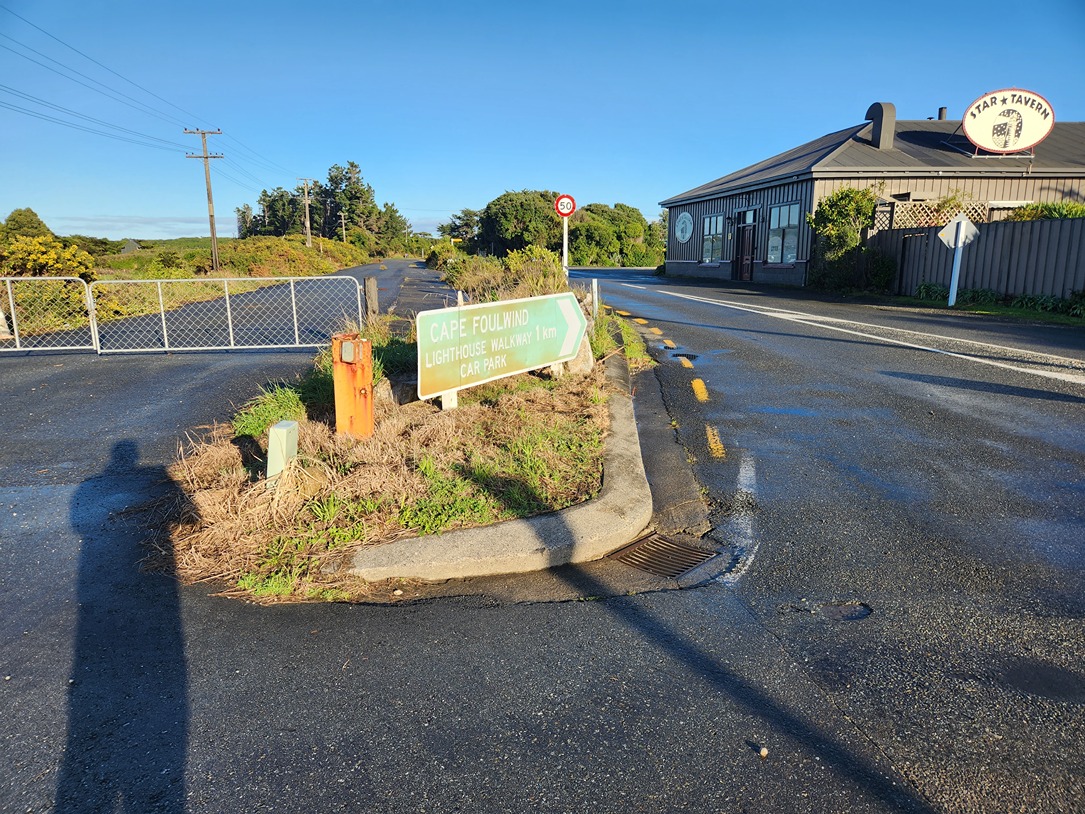
Yes. The revised design retains the project's primary safety objectives and includes intersection improvements and a reduced speed environment to create a safer road environment for all users.

Yes. Cape Foulwind Road will remain the primary traffic route through the intersection.

The eastern section of Limestone Road, near Lighthouse Road, will remain connected to the intersection. The western section of Limestone Road will continue to function as a local access road for adjacent landowners. The revised design does not require Limestone Road to become the primary traffic route through the intersection.

The existing alignment of the Kawatiri Coastal Trail will be retained.

The revised design has no impacts on nearby wetland areas compared with the earlier concept. This reduces environmental effects and lowers consenting complexity.

The project is jointly funded by Buller District Council and NZ Transport Agency Waka Kotahi (NZTA). NZTA is contributing 78% and Council is contributing 22% of the required funding.

Following a detailed review, Council determined that the revised design could achieve the required safety improvements more efficiently while reducing environmental impacts, construction complexity, and project delivery risks. The project is funded through NZTA's Low Cost, Low Risk (LCLR) programme, which has a capped funding threshold and does not provide additional funding beyond the approved allocation. As a result, the revised design was developed to deliver the project's safety objectives within the available funding while providing a practical, affordable, and deliverable solution for the community.

Construction is currently anticipated to commence in late 2026, subject to final design approvals and procurement outcomes.

Some temporary traffic management and construction-related disruption will be required during the works. Council and the contractor will work to minimise impacts and keep the community informed throughout construction.

The costs spent on the project so far are over $600,000. This includes:

Element Value
Land swaps and agreements $67,477
Design $251,589
Project management costs $124,726
Safety, Ecological, Heritage, Consent, Legal, Survey, and others $47,388
Material for construction $137,358
Total $628,488