
- Frequent and ongoing engagement with both science and consenting teams, with a two-monthly meeting set up to work through progression.
Buller’s wastewater management improvement programme
Our rivers, our home, our community, our responsibility – better wastewater management for our where we live.
Project background
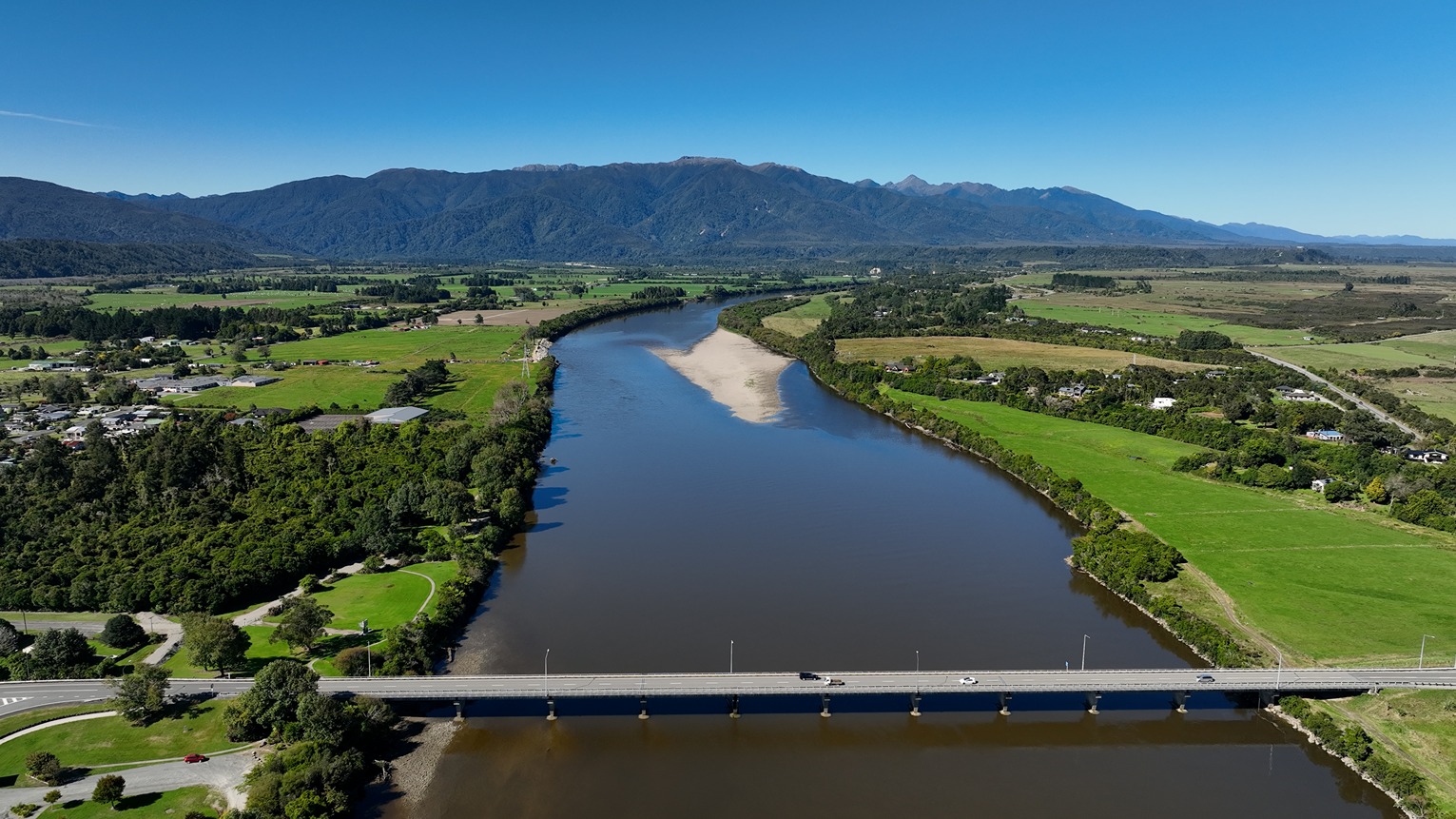
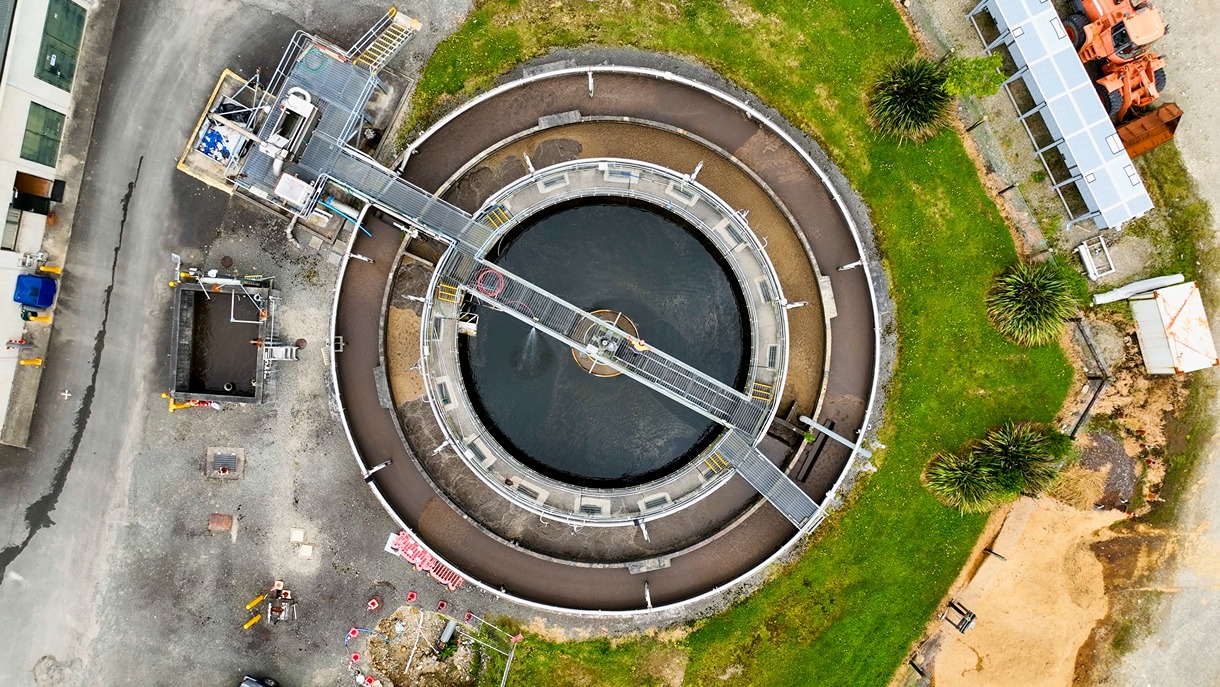
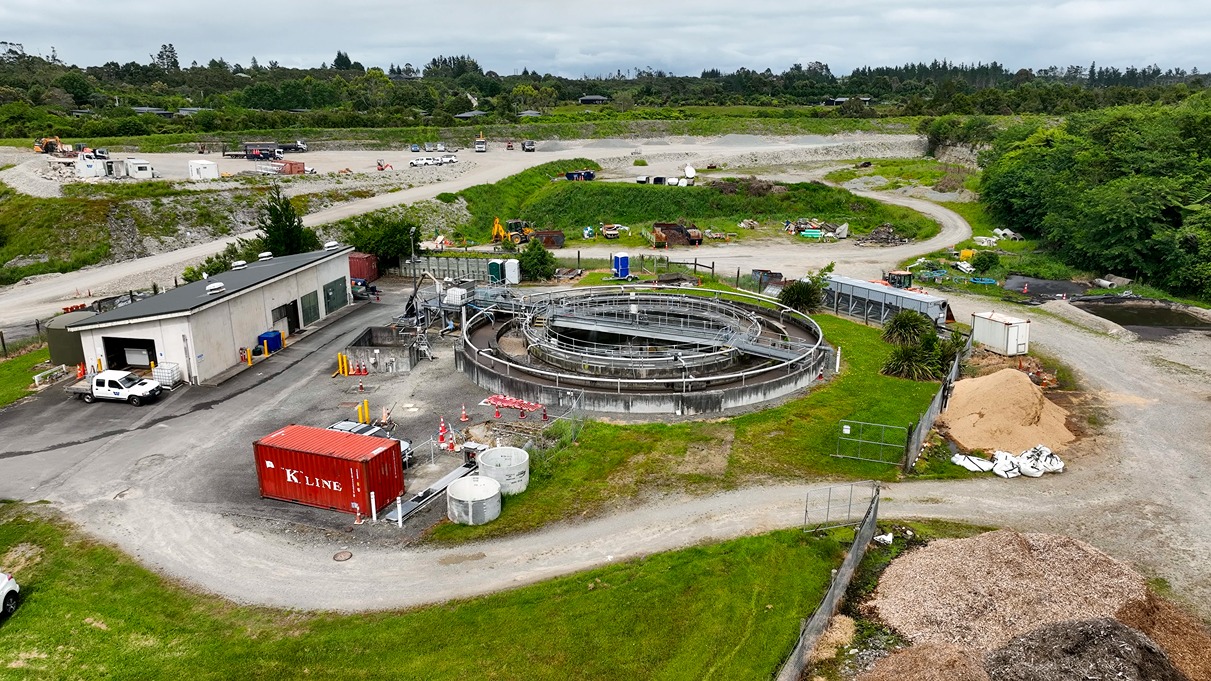
Wastewater from Westport and Carters Beach is treated at the Westport Wastewater Treatment Plant (WWTP), which uses an aerobic process to treat raw wastewater before discharging the treated effluent into the Buller River. To convey wastewater from each household to the treatment plant, Buller District Council (BDC) operates a network of approximately 99 km of wastewater pipeline and 17 pump stations.
Most pump stations are equipped with engineered overflow pipes designed to relieve the system when inflow exceeds the pumps’ capacity. Each of these overflow points must be covered under a resource consent for BDC to operate the system in compliance with the requirements of the Resource Management Act (RMA).
Why do we have a problem?
The previous consent limits the overflow events to no more than 263 hours in any calendar year. However, in 2022 the average discharge in the Buller River was 1681 hours.
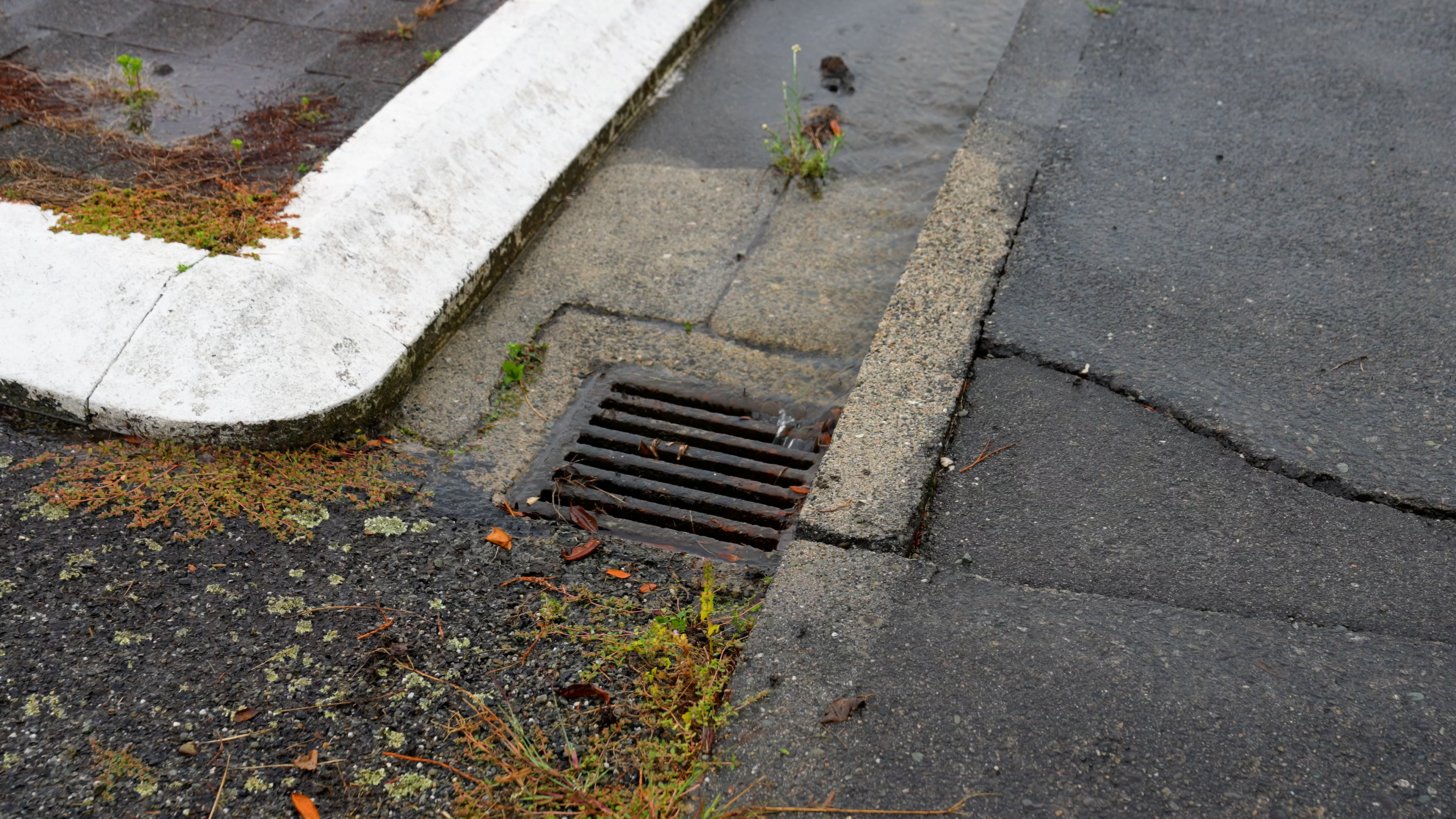
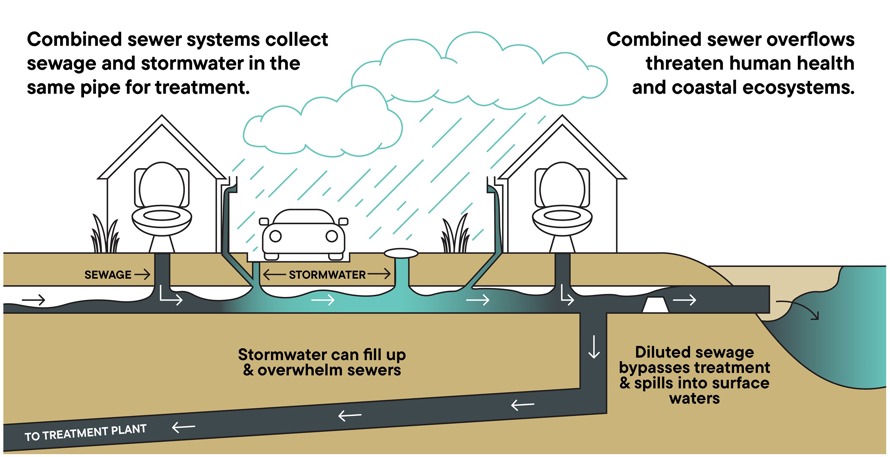
A key issue impacting the discharge volume that Council needs to address is the mixing of wastewater and stormwater, which is an inherited, historic problem in some parts of Westport. Prior to the WWTP being established, wastewater was often discharged directly into the Buller River.
There are a significant number of stormwater and wastewater cross-connections on both private and public properties across the district that contribute to this issue, and fixing these is key to achieving the new resource consent. This project deals specifically with Westport cross-connections.
During wet weather, stormwater inflow and infiltration place significant stress on the wastewater network and pump stations, with some stations receiving up to ten times their normal dry-weather flow. This excessive inflow can overwhelm pumping capacity, increasing the risk of overflows to the environment. Any wastewater overflow from pump stations has undergone primary treatment (screening) before entering the environment.
The West Coast Regional Council (WCRC) requires BDC to commit to a programme to reduce the volume of stormwater in our wastewater network as part of the consent renewal process.
As part of the 2025-2034 Long-Term Plan process, Buller residents were consulted about their preferred option for funding the remediation of these cross-connections. A targeted rate, charged to all Westport and Carters Beach residents connected to the wastewater network was chosen as the most suitable pathway to compliance.
Consent application process:
In April 2023, BDC lodged a consent application under Section 124 of the Resource Management Act 1991 (RMA) with WCRC to enable the continued discharge of wastewater overflows into the Buller River while the new resource consent application is in progress.
As part of the application, BDC is working with the WCRC and Te Rūnanga o Ngāti Waewae to process requests for further information (RFI), which will be provided to clarify the effects on the river environment.
One of these requests was around the establishment of a mitigation programme to reduce the number of overflow discharge hours.
This timeline, and BDC’s commitment to these actions will set the path forward, enabling the resource consent application to progress and allowing Council to comply with its conditions until the next consent renewal date.
What will happen next?
Once BDC has fulfilled the RFIs, WCRC will issue its notification decision, which likely will require WCRC to publicly notify the consent application. This is due to the community’s interest in the river environment, the potential public health implications presented by the overflow discharges.
The public notification process will involve the following steps:
- WCRC will publicly notify the consent application
- The public can make submissions for 20 working days
- If submissions are received, WCRC will work with BDC and the submitters to reach a solution through a pre-hearing meeting or mediation process
- If the submissions cannot be addressed through either the pre-hearing meetings or mediation processes, then a public hearing will be held
- The public hearing must be completed within 75 days of the close of submissions.
- The Hearing Commissioner can request further information or clarification on issues raised in submissions or at the hearing.
What has happened to date?
Follow the progression of the resource consent process with our partners and stakeholders to see how we’re engaging and keeping on track.
- Cultural Impact Assessment received, and two-monthly meetings set up to work through progression.
- Cultural Impact Assessment received.
Medical Officer of Health/Te Whatu Ora
- Ongoing engagement on an as-required basis with the Medical Officer and Health Protection Officer through the project consultant.
- Ongoing engagement with local area and national consenting offices through the project consultant.
The cross-connection reversal programme
A total of 611 properties have been identified as having cross-connections between their stormwater and wastewater systems. In response, BDC has committed to a targeted private separation program aimed at removing these cross-connections to achieve a significant reduction in combined stormwater and wastewater overflows from pump stations. The program will be delivered progressively over the next 10 years.
Reversal delivery programme
To reduce the amount of stormwater entering the wastewater network, BDC will be inspecting homes and reversing any cross-connections on a by-catchment basis.
The first area targeted will be the Roebuck Street catchment, which has been chosen due to its size, and the impact that it is expected to have on the overflow volumes. This will allow Council the opportunity to understand the costs of delivery and refine the programme forecasts.
The intention is to deliver separation works to the affected catchments in the following order:
| Catchment |
| Roebuck Street catchment |
| Carters Beach Pump Station catchment |
| Orowaiti No 1 catchment |
| Orowaiti No 2 catchment |
| Orowaiti No 3 catchment |
| Orowaiti No 4 catchment |
| Orowaiti No 5 catchment |
| Rintoul Street Pump Station catchment |
| Pakington Street Pump Station catchment |
| North Beach Pump Station catchment |
Follow the progression of cross-connection reversal delivery programme through the dashboard below.
Insert dashboard link from Patrick (Stormwater separation dashboard)
Frequently Asked Questions (FAQs)
Is my house in the wastewater targeted rates area?
The Westport wastewater targeted rates area includes all houses in Westport and Carters Beach that are connected to the Westport Wastewater Treatment Plant.
How can I find out if my house is one of the ones that require work?
Please complete a service request, including your name, email, phone number and address. A Buller District Council (BDC) staff member working on the separation project will check this information and respond to you directly. This process is necessary to protect the privacy of homeowners.
Now that consultation is complete, and targeted rates funding has been confirmed, rates will be increased every year from 1 July 2026.
How long will it take to do the work?
Once the separation delivery team is set up, it will work through a plan to notify households (property owners and tenants) and carry out final investigations and remediation for each house requiring separation in the Westport and Carters Beach area. It is estimated that this will be 10 years’ worth of work. However, as the programme is delivered, timeframes and workload will be continuously assessed. The timeframe will also be as agreed with the West Coast Regional Council (WCRC).
Council is currently working on a stormwater improvement strategy to assist with this process.
The sewer has been operated this way for 20 years, why do we have to do this all of a sudden?
The existing resource consent for the combined stormwater and wastewater overflow into the Buller River has expired. To renew the consent, the WCRC requires BDC to commit to a programme to reduce the volume of stormwater in our wastewater network. Completing this work will improve the health of the waterway from a public health perspective, and for cultural awareness.
Lorem ipsum...
Are there any other funding methods available for completing this work?
Other funding models have been explored. These were identified in the Long-Term Plan Consultation Document but were discounted as they were unlikely to be viable.
Media Releases
Read previous media releases covering the progress of this project.
- 17 April 2025 - Community to have their say on Westport’s wastewater and stormwater separation as part of the Draft Long-Term Plan 2025-2034 consultation
- 12 May 2025 - Stormwater and wastewater cross-connections – Carters Beach and Westport
- 19 December 2025 - Council to consult community on funding options for stormwater outlets and mobile pumps for Westport flood protection
FOR MORE INFORMATION
For any queries regarding this project, please send an email to info@bdc.govt.nz.

