Councils are responsible for:
- Receiving project information memorandum (PIM) applications (Form 2AA of the Building (Forms) Regulations 2004)
- Checking the preliminary design plans and description of the proposed building work to see if, based on the information supplied, the following characteristics in clause 1 of Schedule 1A (the exemption criteria) appear to be met:
– the building is standalone (not attached to another building)
– the building is wholly new (not an addition or alteration)
– the floor area is 70 square metres or less
– the building is single storey only - Attaching an additional information form to accompany the issued PIM (Forms 2AAC and 2AAB of the Building (Forms) Regulations 2004) stating, based solely on the information provided in the application, whether the proposed building work is:
– likely to satisfy the characteristics in clause 1 of Schedule 1A
– unlikely to satisfy those characteristics, or
– unclear whether it satisfies those characteristics - Providing relevant site information in the PIM, including planning rules, natural hazards, heritage status, infrastructure availability, and applicable bylaws
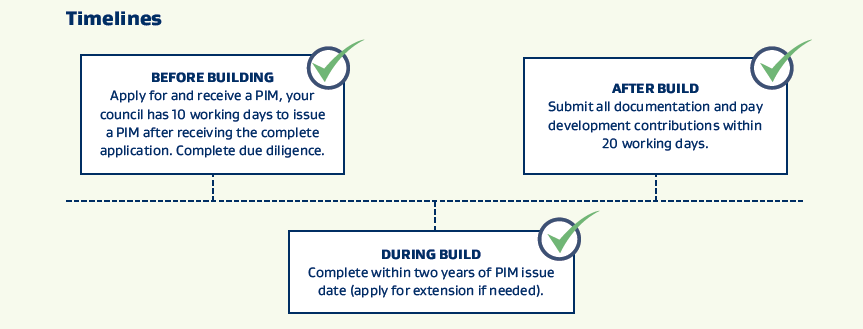
- Issuing a PIM (Forms 2AAB and 2AAC of the Building (Forms) Regulations 2004) for a granny flat within 10 working days of receiving a complete application
- Issuing development contribution notices if applicable, stating payment is due within 20 working days of completion
- Receiving and storing Records of Work from Licensed Building Practitioner(s)
- Receiving and storing required documentation from homeowners after completion (final plans, Records of Work, Certificates of Work, energy work certificates)
- Including this information in the property file and Land Information Memorandum (LIM)
- Considering and processing requests for PIM extensions if a homeowner believes their build will not be completed within two years of the PIM being issued
- Issuing a Notice to Fix if the building is unsafe or non-compliant.
Councils are not responsible for:
- Approving eligibility for the exemption
- Inspecting, monitoring or approving building work under the granny flats exemption
- Checking compliance of the building work with the Building Code
- Assessing documentation for compliance (records are stored, not reviewed)
- Verifying, inspecting, or guaranteeing compliance with the exemption criteria - responsibility for compliance remains with the homeowner.
Councils hold good faith liability protection for information provided in PIMs and for storing records.